General meaning
⌄
A light opportunity appears, but it comes with recurring tension: luck reopens an old topic.
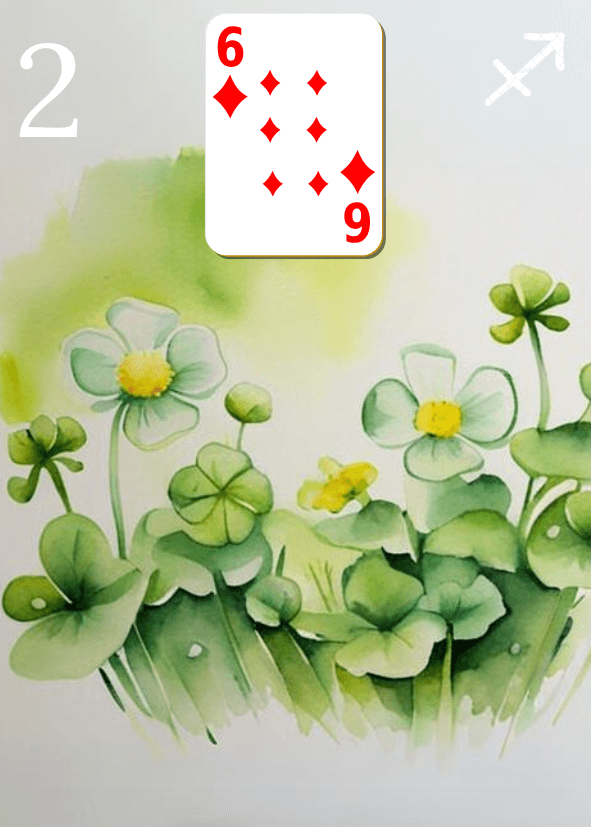
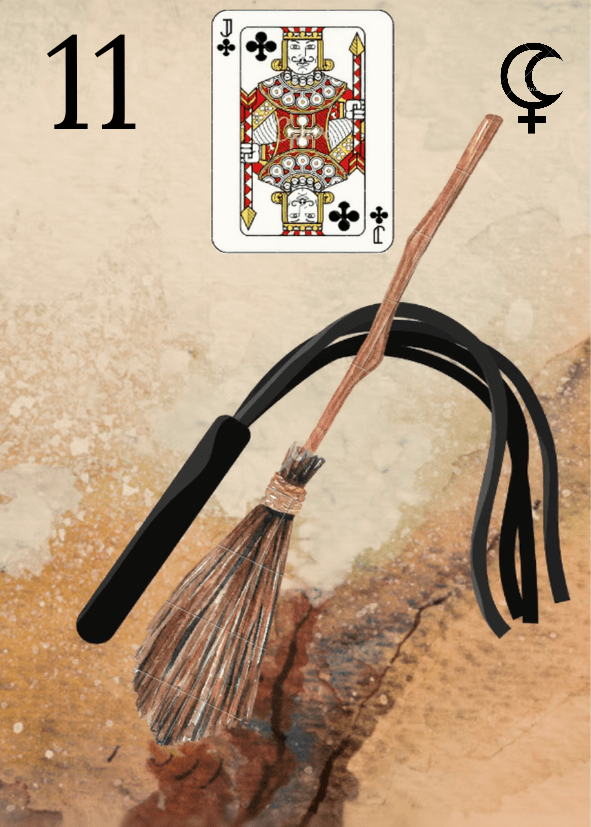
Clover signals a boost, a small stroke of luck, a quick opening, sometimes an ease that makes it feel like everything will finally move. Whip arrives as a reminder: tension, heated discussions, demands, repetition, rivalry, or a pattern that returns. This combination often describes a moment where an opportunity creates motion, then exposes a friction point. You can gain something, but you must manage tone, pace, and how you respond. The risk is not luck itself, but how it affects your nerves: competition, criticism, pressure, or the need to prove something. It is a powerful combination for identifying where you create tension out of habit.
Love and relationships
⌄
A reconnection is possible, but it reactivates a cycle of arguments or reproaches: the key is the tone.
In love, Clover and Whip can signal a message, an invitation, an improvised date, a chance to meet again. Yet the momentum can reignite an old dynamic: reproaches, recurring arguments, jealousy, sensitivity, or control. This combination can describe an intense bond where you test each other, provoke, or quickly fall back into the same debate. It invites you to change the script: leave the repetition, avoid jabs, and choose simpler words. A reconnection can be genuine, as long as you do not confuse intensity with quality.
Work and vocation
⌄
A professional opportunity arises, but it brings pressure, rivalry, or heated discussions: securing the framework prevents wear and tear.
At work, Clover announces a quick opening: a proposal, contact, solution, a small door that opens. Whip immediately signals tension: competition, criticism, repeated revisions, heated meetings, or performance pressure. This combination can describe an environment where you are constantly solicited, where constant reactivity is expected, or where an opportunity exposes rivalry. The challenge is to seize the opening without being overwhelmed by pressure. Clarifying rules, deadlines, and task ownership is essential. Otherwise, a lucky break can lead to burnout as the pace accelerates.
Money and material security
⌄
A small advantage appears, but discussions about money become tense: the recurring reproach weighs more than the amount.
With money, Clover can bring a discount, refund, avoided expense, small gain, or a chance to buy smarter. Whip presents money as an electric topic: fights, accusations, scorekeeping, tension about who pays what, or the same conversations repeating. This pairing shows that the stake is not always the sum, but the emotional charge surrounding it. A small advantage can calm things for a moment, but tension returns if the root issue is not addressed. It invites simple rules, fewer scenes, and budgeting without pressure: precise, calm, and without blame.
Health and energy
⌄
The body reacts to repetitive stress: energy lifts, but nerves flare if the pace becomes too intense.
For health, Clover suggests a small boost, a light improvement, a simple solution that helps. Whip speaks to nervous tension: tightness, stress-related aches, irritability, overwork, or insomnia cycles when the mind loops. This combination invites you to examine rhythm: what excites or accelerates can also exhaust. It can also point to repeating habits that maintain tension, like always trying to go faster or pressuring yourself to perform. Relief returns when you change the cadence and stop treating yourself like an opponent.
Objects
⌄
Supports linked to heated exchanges, repetition, and performance pressure.
- Messages, exchanges, or notifications that constantly restart a discussion
- Overloaded calendar, task list, or schedule that amplifies pressure
- Documents corrected in loops, multiple versions, or files endlessly revised
Places
⌄
Places where you debate, repeat, and pressure yourself, sometimes without realizing it.
Meeting rooms, open spaces, a desk where exchanges become sharp, rehearsal or training spaces, places where arguments loop. At home, it can be the kitchen or living room where the same topics resurface. Clover adds immediacy and proximity: the trigger may be a detail, a message, a remark, and then the atmosphere tightens.
Personality
⌄
A quick, reactive temperament that thrives on challenge but must avoid self-imposed pressure.
This combination describes someone who enjoys momentum, openings, small wins, and can thrive on challenge. Clover brings optimism and spontaneity. Whip introduces nervousness, high standards, the ability to push hard, but also the risk of exhaustion through self-criticism. The strength lies in turning challenge into something constructive. The trap is turning every opportunity into a trial, every detail into conflict, and every success into a new demand. Maturity here involves maintaining a calm heart in a fast-paced life.
Profession
⌄
Work where you repeat, perform, and where tension rises quickly if the rules are unclear.
- Sports, coaching, training, or performance fields built on repetition
- Creative work, stage, film, where you rehearse and face scrutiny
- Negotiation, sales, or roles involving sharp exchanges and rivalry
Archetype
⌄
The challenge that complicates luck.
This archetype marks the moment an opportunity arises and the mind immediately turns it into a conflict. It reminds you that luck can open a door without necessitating a battle. When it appears, it invites you to pay attention to your tone, your pace, and how you speak to yourself. Winning is not just about obtaining something; it is about achieving it without pressuring yourself, without looping, and without damaging your relationships.
Shadow work
⌄
Turning every opportunity into conflict, competition, or self-critique until the momentum burns out.
In shadow, Clover becomes impulse and Whip transforms into aggression or pressure. You rush, then snap, criticize, demand, and the opening turns into tension. You may also attract rivalry or replay the same debate without altering the script. This combination invites you to break the cycle: let go of the need to prove, slow the pace, and choose simpler language. Momentum can persist, but it must become gentler.
Calibration questions
⌄
What opportunity can remain light if you change your tone and pace instead of reverting to repetition?
- What topic always resurfaces and puts you under tension as soon as an opportunity arises?
- How could you respond differently to avoid restarting the same argument or pressure?
- What simple rule could you establish to enjoy the luck without exhausting yourself?