General meaning
⌄
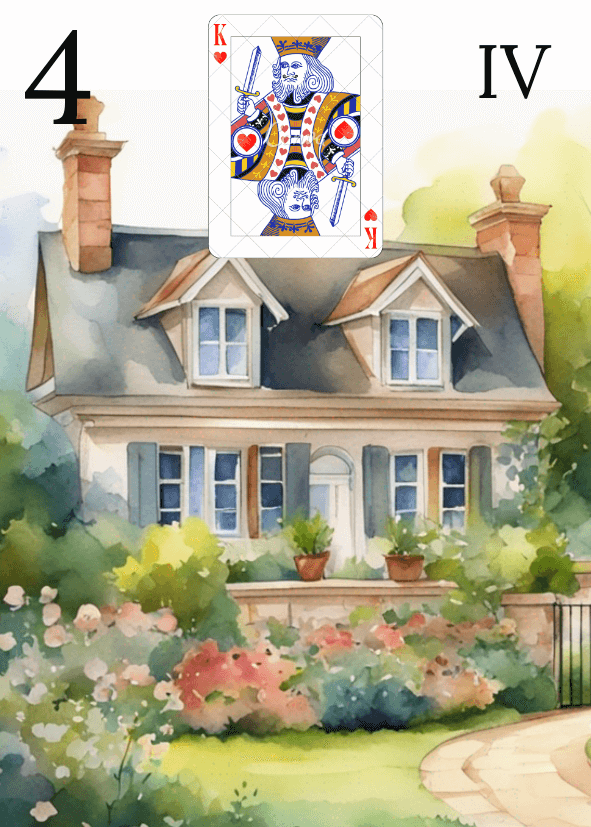
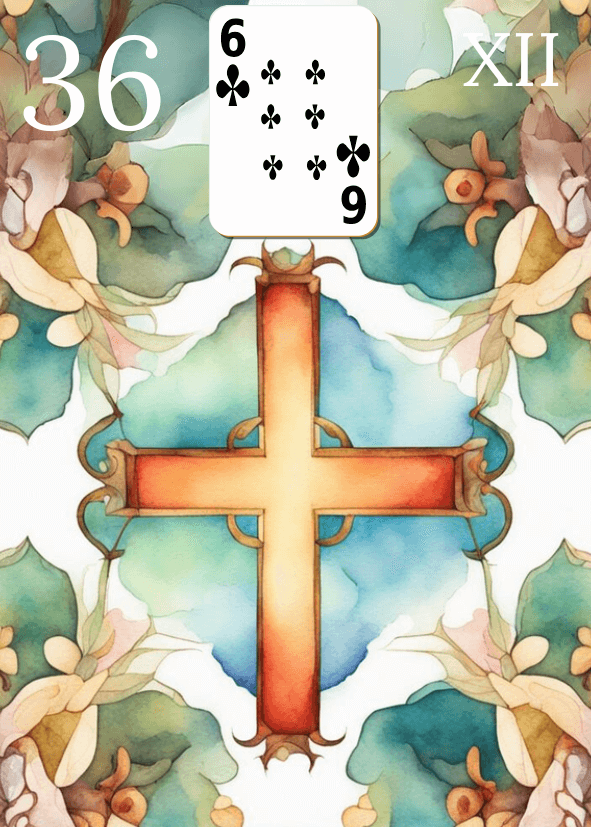
The home becomes a trial: the House reveals the framework, and the Cross signifies the weight, responsibility, or conclusion of a domestic cycle.
The House represents home, family, security, and the framework of daily life. The Cross evokes trial, burden, heavy responsibility, sadness, moral fatigue, but also meaning, faith, and closure. Together, these cards convey a weight in the domestic sphere. It may be a family burden, a duty to assume, a difficult period, or a chapter that is concluding. The combination does not dramatize for the sake of it: it indicates that something is genuinely weighing down, and that the home can no longer function as it once did. The message is clear: one must confront it, accept what is, and choose what must be borne and what must be closed. Sometimes, the Cross signifies an ending that liberates, as it compels one to cease the wear.
Love and relationships
⌄
Intimacy carries a weight: responsibility, sadness, or the conclusion of an emotional cycle, with questions of duty and domestic reality.
In love, the House speaks of shared life, intimacy, and emotional security. The Cross introduces a tone of sorrow, fatigue, or duty, as if the bond is burdened. This combination may indicate a couple facing a family trial, heavy responsibilities, or the weariness of daily life. It may also signal the conclusion of a cycle, when cohabitation becomes too burdensome, or when one has endured something for too long that no longer nourishes. The message is pragmatic: what is borne must be chosen. If love becomes merely a duty, one must restore meaning or accept closure. The Cross does not tolerate half-truths; it demands an honest decision.
Work and vocation
⌄
The weight of the framework is felt: heavy responsibilities, lasting pressure, or constraints related to a structure, sometimes linked to the home.
At work, the House represents structure, business, and routine. The Cross evokes burden, constraint, pressure, and sometimes the conclusion of a cycle. This combination may indicate a heavy responsibility within an organization, a period where one carries a significant load, or work that impacts personal life. It can also signal a necessary transition: reaching the end of a model, a framework, or a way of functioning. The message is clear: prioritize, lighten, and clarify what is sustainable. The Cross invites one to cease self-sacrifice as a mode of operation.
Money and material security
⌄
Home costs, in the literal sense: heavy expenses, debts, unforeseen events, or material pressure that weighs on morale and necessitates a decision.
Regarding finances, the House refers to expenses, housing, and material security. The Cross indicates a weight: debts, constrained expenses, heavy financial responsibility, or ongoing worry. This combination may signal a period where housing, family, or domestic management weigh heavily financially. It can evoke excessively high burdens, a substantial loan, unforeseen events, or a situation where one persists out of duty more than balance. The message is pragmatic: examine the numbers, accept reality, and decide. Sometimes, the solution is to lighten, renegotiate, change the framework, or close a commitment that is no longer sustainable. The Cross is not there to punish; it is there to end wear and tear.
Health and energy
⌄
Moral fatigue is evident: domestic stress, emotional burden, and a need for deep rest to avoid carrying beyond what is possible.
For health, the House evokes the environment, rest, and habits. The Cross emphasizes fatigue, heaviness, sadness, and moral impact. This combination may indicate exhaustion related to daily burdens or a period where the body expresses mental weight. It invites attention to living conditions, sleep, and boundaries. The message is straightforward: one cannot be the pillar of everything, all the time. It is necessary to lighten the load, seek help, and respect the need for recovery; otherwise, fatigue may become chronic.
Objects
⌄
Objects that materialize weight, duty, and closure, often related to domestic management and responsibilities.
- Bills, reminders, heavy files, or administrative papers related to housing
- Boxes, suitcases, or sorting objects when a domestic chapter closes
- Keys, contracts, or commitment documents that weigh and require a decision
Places
⌄
Places where the burden is felt: a heavy house, rooms associated with responsibilities, and locations where one must confront a concrete reality.
House, apartment, family places, but also administrations, offices, notaries, or any location where obligations are managed. The Cross can point to a place marking the end of a cycle, such as a vacated home, an emptied space, or an area where one sorts, closes, and turns a page.
Personality
⌄
A person who carries a lot: a sense of duty, endurance, but at risk of exhaustion and sadness when everything rests on them.
This duo can describe someone very responsible, who holds the house, family, or framework, sometimes at the cost of their own energy. The person may be courageous but fatigued. Their point of vigilance is self-sacrifice, guilt, or the belief that they must carry everything alone. Their strength lies in clarity: when they accept to lighten their load and ask for support, they transform a trial into a passage, and they regain their breath.
Profession
⌄
Roles where one carries, supports, and manages heavy burdens, with a dimension of responsibility and structure.
- Social work, support, where one deals with difficult situations
- Administrative management, housing, where one handles heavy files and obligations
- Family or team responsibilities, where one maintains a framework and provides support
- Care, assistance, where duty and endurance are called upon
Archetype
⌄
The burden-home, the meaning-home.
This archetype understands the weight of daily life. It comprehends what it means to hold, support, and carry, sometimes in silence. Its path is not to carry more, but to carry just enough. It learns to distinguish useful duty from self-sacrifice, to close what exhausts, and to rebuild a more livable home. Its future is demanding but clear: less wear and tear, more truth, and a peace that comes when one stops holding the impossible.
Shadow work
⌄
Condemning oneself to carry: remaining out of guilt, allowing sadness to settle, and confusing endurance with love or loyalty.
In the shadow, the Cross can entrap one in a logic of burden. One convinces oneself that it is normal, that one must endure, that there is no choice. The House then becomes a place of heaviness, rather than a refuge. The corrective is concrete: name the weight, distribute the load, seek help, and accept that an end of cycle can be a release. Dignity, in this context, consists of choosing what is sustainable and ceasing to live under a ceiling that is too low.
Calibration questions
⌄
What weighs in your home, and what honest decision could lighten the load so that the house becomes a livable refuge again?
- What responsibility do you carry out of duty, and which should no longer rest solely on you?
- What needs to be closed or reorganized to stop the wear and tear of daily life?
- What concrete help can you ask for, right now, to lighten the burden?