
Petit Lenormand combinations

Whip and Fox

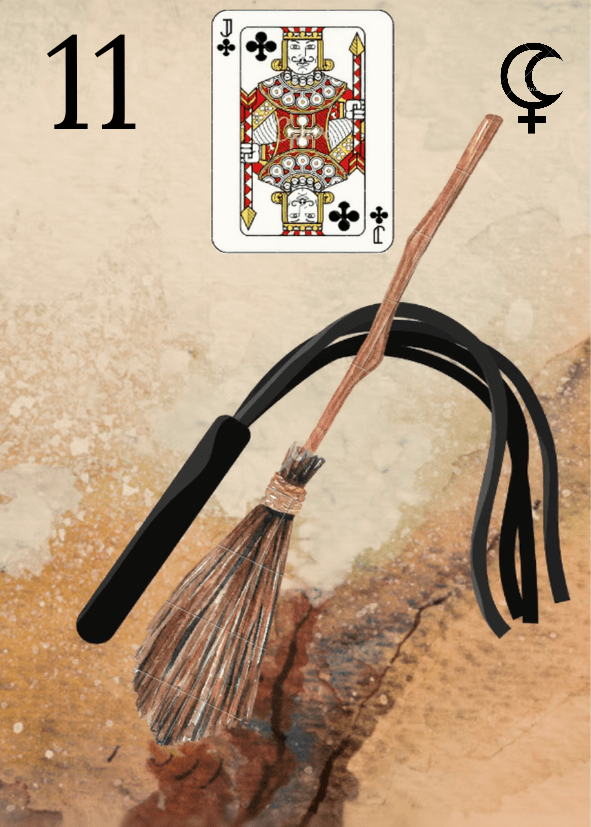
Here you see the two possible orders of the pair Whip and Fox. On the left, Whip acts on Fox. On the right, Fox sets Whip in motion. The concrete scenes help you feel what shifts as soon as the order shifts.

Combination
11 Whip → 14 Fox

General meaning

Repeated disputes reveal a climate where everyone primarily protects their own interests.

The Whip indicates a cycle of tensions, reproaches, and confrontations that repeat. Placed before the Fox, it shows that these heated exchanges clash with a world of strategy, mistrust, and resourcefulness. Disputes are not only about ideas but also about loyalty, work methods, and each person's real honesty. The combination describes an atmosphere where everyone feels on the hot seat and seeks, consciously or not, to justify, defend, or save their position. Deep down, the Ring reminds us that this battlefield is often a contract, collaboration, or commitment whose terms are no longer perceived as fair. The Ship in the background suggests that a way out may involve a change of course rather than an endless escalation of reproaches.

Love and relationships

Disputes revolve around trust, transparency, and real intentions.

On the sentimental level, the Whip followed by the Fox evokes scenes where one reproaches the other for their cunning, lack of sincerity, or tendency to 'profit' from the situation. This can refer to disputes about money, task distribution, daily organization, or schedules, amidst suspicions: is he or she taking advantage of me, is it really balanced, does he or she say everything? This combination can also reflect accusations of flirting at work, hidden messages, overly present exes, or presumed double lives. The Ring reminds us that the heart of the problem is the basic agreement between you: what form of commitment do you really have, and what does each person actually do?

Work and vocation

A conflictual atmosphere reveals the hidden side of professional strategies.

At work, the Whip and the Fox form a typical combination of conflicts around loyalty, schedules, objectives, and daily 'small arrangements'. One may be summoned to justify their performance, breaks, statements, or versatility, in an already charged atmosphere of unspoken issues. This can refer to moral harassment, repeated attacks on an employee's reliability, or tensions between freelancers and clients regarding execution conditions. The Fox emphasizes that everyone seeks to preserve or optimize their position, even if it means circumventing certain rules. The Ring highlights the question of the contract: what has been promised, what is actually demanded, what is acceptable or not. The Ship invites one to consider whether they wish to continue fighting under these conditions or prepare for a transition to a healthier environment.

Money and material security

Disputes erupt over income, contracts, or calculations of benefits.

Financially, this combination can signal altercations regarding fees, commissions, allowances, unpaid hours, or perceived unfair compensation. Whip depicts tumultuous negotiations, hurtful remarks, aggressive reminders. Fox shows a logic of calculation, defending one's interests, even attempts to silence certain costs. It can also evoke tensions around income declaration, tax optimization, or the use of benefits in kind. Ring reminds that the written or tacit agreement is at the heart of these exchanges: what has been signed, promised, or implied. Ship suggests the possibility of changing contracts, clients, or structures to regain a less conflictual relationship with money.

Health and energy

The body or morale reacts to an environment where one feels constantly evaluated and on the defensive.

In terms of health, Whip and Fox together can speak of chronic stress related to work or a context where one must always prove their worth. Muscle tension, digestive problems, recurring headaches, sleep disturbances can result from a climate of suspicion and over-control. Whip emphasizes the repetition of aggressive situations, absurd hours, or infernal rhythms. Fox highlights adaptation strategies: over-adapting, 'playing the game', pretending, hiding fatigue or difficulties. Ring raises the question of what you have accepted over time: what commitments towards an employer, a client, or a lifestyle lead you to these excesses? Ship suggests that health could improve with some form of mobility: changing teams, positions, or simply taking physical and psychological distance.

Objects

Concrete documents and tools concentrate the tension between control and resourcefulness.

  • Employment contract, amendment, or clause deemed abusive and a source of disputes
  • Schedule or task list used to closely monitor everyone
  • Disciplinary file, email of reproaches, or performance-oriented meeting report

Places

Work or negotiation spaces become arenas of confrontation.

Closed office, meeting room, monitored open space, reception desk, or any space where tight control of activity is exercised. Whip shows that these places are associated with frequent re-framing, evaluations, and repeated remarks. Fox indicates that everyone enters with their strategy, their mask, their personal 'calculation'. The atmosphere can be electric, with everyone keeping in mind the question: how far am I willing to endure these conditions?

Personality

A reactive person in the face of the slightest suspicion of exploitation or manipulation.

This personality can be explosive when they perceive that someone is abusing their goodwill or playing double games with them. They cut short, raise their voice, revisit the same reproaches, sometimes to the point of exhaustion. Fox shows that they are not naive: they spot gray areas, hidden interests, and contradictory instructions. Ring emphasizes that they take their commitments very seriously and struggle with the idea of being used. The challenge is to defend their interests without entering an endless cycle of conflicts that ultimately tires them more than what they wanted to protect.

Profession

Jobs under high pressure where suspicion and evaluation are constant.

  • Manager or supervisor in a highly competitive work environment
  • Control, audit, or inspection officer in high-pressure structures
  • Self-employed or freelance worker constantly negotiating their conditions to avoid exploitation

Archetype

The contract that cracks at the level of trust.

This archetype represents the scene where an initially acceptable agreement begins to crack because everyone feels wronged, judged, or manipulated. Whip embodies reproaches, reminders of rules, and arguments. Fox embodies cunning, caution, and defense of one's interests. Ring at the center reminds that as long as the pact is not clarified, each interaction risks feeding an increasingly conflictual cycle.

Shadow work

Staying trapped in a power struggle instead of clarifying or leaving.

In its shadow, this combination pushes to respond to cunning with anger, to pressure with counterattack, without ever revisiting the basic agreement. Everyone accumulates grievances and evidence against the other, forgetting to ask whether the framework is still fair. The risk is to turn each day into a battle, convincing oneself that there is no other option while an exit door begins to emerge with Ship.

Calibration questions

The draw questions you about what you still accept in this commitment.

  • In which contract or agreement do you feel like you are constantly fighting to defend your interests?
  • At what point does anger or argument become your only means of negotiation?
  • What concrete options do you have to rebalance, renegotiate, or leave this framework that puts you under so much pressure?
Combination
14 Fox → 11 Whip

General meaning

To endure, you constantly adjust within a framework that continually redefines you.

With Fox in the first position, the situation is immediately marked by resourcefulness, adaptation, and vigilance. One makes do with limited means, navigating a vague contract, a fragile status, or changing instructions. When Whip arrives behind, it shows that these compromises are maintained at the cost of repeated pressure: remarks, criticisms, barely veiled threats, reminders to comply. The combination evokes a terrain where one has accepted, sometimes out of necessity, shaky conditions, and where one regularly finds themselves summoned to 'prove themselves.' Ring emphasizes the key question: what commitment have you made and how far are you willing to extend it? Ship in the hidden position indicates that a trajectory of exit, mutation, or retraining has already begun to take shape, even if it is not yet formalized.

Love and relationships

The bond is based on calculations of security and comfort, but the tension is rising.

In love, Fox followed by Whip can describe a relationship where each person calculates a lot: income, housing, custody, organization, concrete benefits of staying together. One remains a couple because 'it's simpler this way,' but disputes become regular. One may reproach the other for their opportunism, lack of sincerity, or transparency. The other may defend themselves with practical arguments: 'if I leave, everything collapses.' Sexuality can also be tinged with tension, power dynamics, or emotional blackmail. Ring reminds us that the implicit or explicit sentimental contract may no longer correspond to the reality of the bond. Ship suggests that a possibility of leaving, reorganizing life, or redefining oneself already exists, even if it is frightening.

Work and vocation

To protect your position, you accept adjustments that sometimes exceed what is reasonable.

At work, this combination is very telling: Fox illustrates the clever employee, the flexible independent worker, the professional who knows how to adapt and survive in a complicated environment. Whip shows that in return, they endure criticisms, pressures, and repeated demands. This can point to a hierarchy that takes advantage of adaptability to load more, or a client who always demands more without recognizing the work done. Sometimes, it's you who 'whips' yourself internally to remain effective in an objectively toxic context. Ring indicates that the real issue is the form of contract that binds you to this environment: type of position, status, moral or financial commitment. Ship in the hidden position suggests that preparing for a transition, training, or change of direction could become essential to no longer depend on such an aggressive framework.

Money and material security

Money is managed pragmatically, but at the cost of constant pressure.

On a material level, Fox and Whip talk about financial survival strategies: juggling several small jobs, accepting underpaid contracts, constantly negotiating to maintain an income. The downside is a feeling of never being able to let your guard down. Whip emphasizes payment reminders, follow-ups, demands for payment, or comments on your way of managing money. It can also refer to tax or administrative audits experienced as intrusive. Ring reminds that one or more structural commitments weigh heavily: credit, lease, pension, subscription, partnership. Ship invites you to consider a broader plan, perhaps by changing sectors, living location, or business model to break out of this cycle of survival under pressure.

Health and energy

The body and nervous system bear the effects of constant vigilance and tension.

In terms of health, Fox highlights an instinctive intelligence that picks up warning signals before others. You know when your body starts to protest, you adjust your diet, your sleep, your way of organizing to cope. But with Whip in the second position, this adaptability occurs in an environment that never really lets up on the pressure. The risk is slipping into a state of underlying stress, chronic nervousness, recurring pains without clear organic cause. Ring emphasizes that certain lifestyle habits or commitments made to yourself (rhythms, obligations, promises) trap your body in an exhausting pattern. Ship suggests thinking in terms of trajectory: what would your body need over several months to get out of this 'constant alert' mode?

Objects

Concrete supports materialize both the survival and the pressure.

  • Short contracts, fixed-term contracts, temporary assignments or service agreements renewed under strict conditions
  • Performance tracking tables, timesheets or order books filled out under the watchful eye of a superior
  • Emails or reminder messages insisting on deadlines and objectives that are difficult to meet

Places

Work or negotiation places where one remains on high alert.

Call center floor, sales counter, restaurant kitchen, construction site or any space where one works 'on the edge' with little margin for error. Fox shows that one deploys treasures of ingenuity to make everything work. Whip reminds that these places are marked by pressure tactics, public reprimands, mood swings, or surprise inspections.

Personality

A cunning and adaptable person, but too accustomed to taking hits to keep their place.

This personality knows how to read situations, anticipate reactions, and navigate obstacles. They have often learned to survive in contexts where nothing is ever completely secure. However, with Whip, they end up integrating the idea that they must accept criticism, re-framing, and sometimes humiliation to not lose what they have painstakingly obtained. Ring points to a form of loyalty to systems that do not truly respect them. The challenge is to recognize their worth and stop taking repeated violence, even subtle, as 'normal.'

Profession

Roles exposed to the pressure of results and tight control.

  • Salesperson, telemarketer or seller subjected to strict objectives and daily monitoring
  • Service or cashier employee working under the watchful eye of hierarchy and customers
  • Independent professional constantly negotiating their rates, deadlines, and workload

Archetype

The tightrope walker advancing on a taut contractual line.

This archetype shows someone walking a tightrope: they need this contract, this job, or this situation to ensure a minimum of security, but this same link imposes constant tension. Fox embodies finesse, cunning, practicality. Whip embodies the possible sanction at every misstep. Ring, at the center, reminds that the real issue is whether this contract still deserves all this acrobatics.

Shadow work

Accepting the unacceptable for too long out of fear of losing what nourishes you.

In its shadow, this combination pushes to convince oneself that there is no choice, that precariousness or difficulty justifies everything, including humiliating remarks, threats, or abuses of power. One becomes an expert in the art of survival, but at the cost of deep weariness. Ship, in the background, reminds that another path already exists in the back of the mind: training, changing employers, moving, reorientation. The shadow consists of continually pushing it away under the pretext that 'it's not the right time.'

Calibration questions

The draw invites you to measure the true cost of this constant adaptation.

  • In which area do you find yourself enduring remarks or conditions that you would consider unacceptable for someone else?
  • What contract, agreement, or arrangement still constrains you to remain in an environment that puts you under pressure?
  • What small concrete steps could you prepare right now to move closer to a fairer and more breathable framework?
A wink for advanced readers

Quintessence and the hidden card of the pair

Each combination is carried by a Quintessence that gives the overall direction, and a hidden card that works in the background. These two cards illuminate the scene without replacing the main reading.

Lenormand card 25 Ring
Quintessence

25 Ring

The combination emphasizes a commitment or contract under significant tension.

weakened contract conflictual link conditional commitment
Lenormand card 03 Ship
Hidden card

03 Ship

In the background, a desire to leave or redirect pushes towards a break.

temptation to flee mobility project search for elsewhere