Petit Lenormand combinations

Tower and Letter

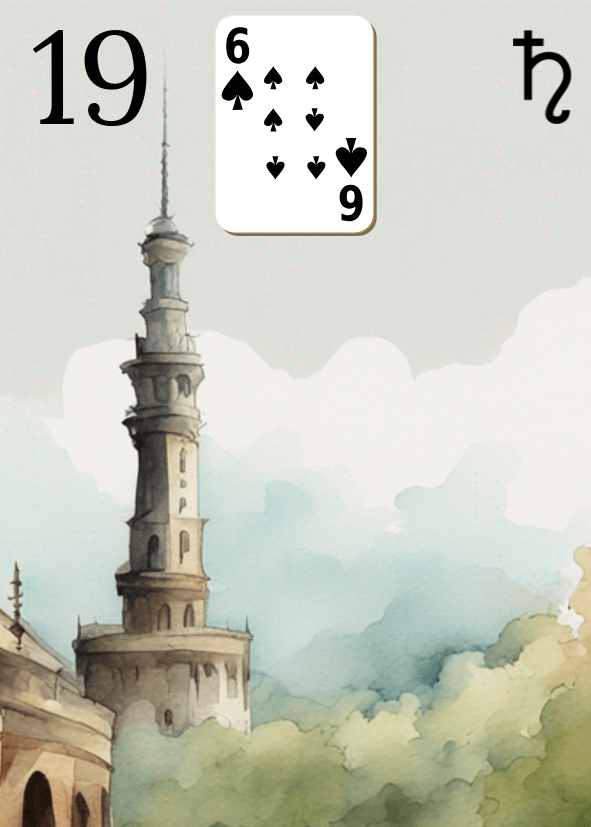
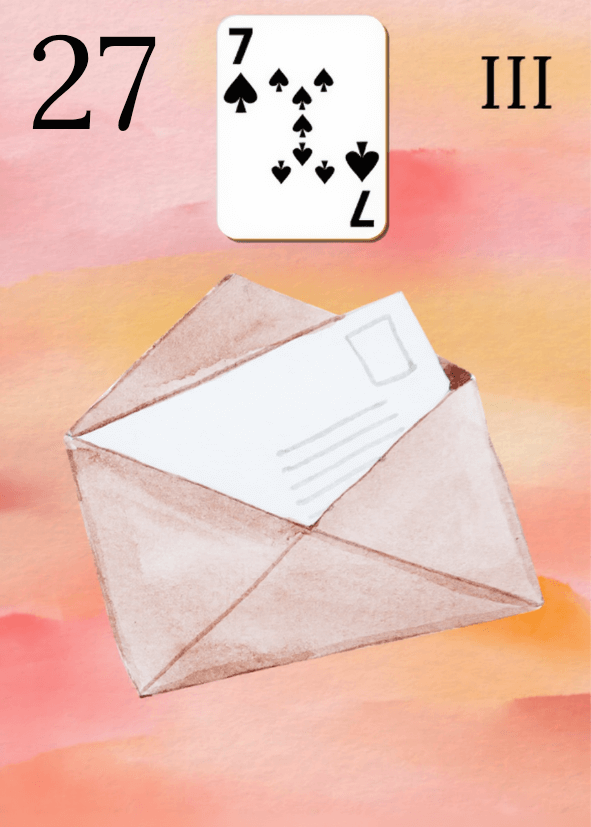
Here you see the two possible orders of the pair Tower and Letter. On the left, Tower acts on Letter. On the right, Letter sets Tower in motion. The concrete scenes help you feel what shifts as soon as the order shifts.

Combination
19 Tower → 27 Letter

General meaning

A distant tower sends a message that formalizes a decision, a position, or a reminder of the framework.

With Tower first, the origin of the message clearly lies with a higher structure: administration, justice, management, hierarchy, reference organization. Letter, behind, shows the chosen form of communication: letter, report, summons, formal email, written notification. This combination emphasizes that information does not circulate in a discussion mode, but through a document that is authoritative and can be kept as proof. It invites you to read carefully what is written, to distinguish what is truly enacted from what still pertains to information or proposal, and to position yourself with full knowledge.

Love and relationships

Emotional exchanges occur in writing in a context of distance or rigidity.

In romantic life, Tower followed by Letter can indicate a long-distance relationship, a dialogue mainly maintained through messages, emails, or letters, or a tendency to formalize matters rather than speak them aloud. One may receive a written declaration of separation, a clarification, a breakup letter, but also a deep correspondence between two people who cannot meet face to face. Sometimes, this combination evokes a relationship framed by rules or social stakes (difference in status, background, culture), where writing serves as a secure channel. It invites you to observe what you dare not say otherwise than through screen or paper, and how much this form protects or confines you.

Work and vocation

The professional world manifests through letters, reports, and formal communications.

In terms of work, this duo speaks of summons, management decisions, meeting reports, contracts sent for validation. Important information passes through the written channel of the company or administration: memos, updated regulations, warnings, promotions, job changes. The Tower reminds who holds authority; the Letter shows the written trace of that authority. The combination encourages you to archive these documents, check dates, signatures, and not overlook details sometimes hidden in the fine print.

Money and material security

Money is at the center of institutional correspondence that can secure or worry.

On a material level, the Tower and the Letter can announce the arrival of financial documents: statements, tax notices, coverage decisions, reminder letters, contract proposals, responses from social or banking organizations. This can be a loan agreement or a debt reminder, an acceptance of assistance or a request for supporting documents. The combination emphasizes the importance of handling these letters without letting them pile up, responding on time, and, if necessary, getting assistance to understand what it really implies.

Health and energy

News regarding health comes through writings from a medical or administrative framework.

Regarding health, this tandem evokes examination reports, letters from specialists, appointment summons, coverage decisions, notifications of allowances or rights. The Tower represents the hospital, clinic, health fund, commission; the Letter translates how the verdict or proposal reaches you. This combination invites you to keep your documents in order, to ask for explanations if certain terms remain unclear, and to consider these writings as supports for dialogue rather than as fixed sentences.

Objects

Material supports bear the written trace of the structure's words.

  • Registered letters, headed envelopes, stamped or signed forms
  • Printed emails, official notifications, decisions archived in folders or binders
  • Summons, agreement, refusal, or modification forms of rights

Places

Places are associated with offices where official correspondence is drafted, signed, and sent.

Possible settings range from the upper floors of an administrative building to the corridors of a court, including the offices of a director, notary, lawyer, or department head. One can imagine rooms where letters are printed, counters where letters are dropped off or picked up, secretariats that become the mandatory passage point between the tower and the rest of the world. The combination makes visible the very concrete dimension of these places in the fate of many files.

Personality

A structured personality communicates in a controlled manner, often through carefully weighed writings.

Psychologically, the Tower and the Letter can describe someone reserved, serious, who prefers to express their point of view in writing rather than in spontaneity. This person likes to keep records, formulate precisely, and proofread before sending. They may appear cold, but they take seriously the importance of formulation and the responsibility of speech. However, the combination invites them not to hide entirely behind formality, especially when the situation also calls for a more direct and human presence.

Profession

Roles where one drafts, transmits, and formalizes decisions on behalf of a structure.

  • Secretary general, clerk, executive assistant, or anyone managing institutional correspondence
  • Lawyer, notary, attorney, or advisor drafting acts, notifications, or formal notices
  • Written communication manager, responsible for drafting reports, notes, or circulars

Archetype

The tower that speaks through letters.

Symbolically, this archetype represents the voice of the institution, descended from its heights in the form of a document. It reminds you that the pen can be an extension of power as well as a tool for clarification. It poses a simple question: at what point do you settle for receiving without questioning, and when do you wish to respond, contest, or complete what is written to you?

Shadow work

Allowing oneself to be crushed or frozen by a letter instead of making it a starting point for action.

In its most difficult version, this duo can signify cold, impersonal letters that hurt or worry: abrupt refusals, veiled threats, dry reminders of regulations, notifications experienced as a condemnation. The risk is to internalize this written word as an absolute truth, without seeking nuance or support. The combination reminds you that even an official letter can be discussed, clarified, contested, and that there are sometimes avenues for recourse or dialogue.

Calibration questions

What does this letter from above really want to tell you, beyond the form it takes?

  • What message have you recently received from an institution, and what did you feel even before reading it in detail?
  • What could you ask for as clarification or adaptation instead of taking this letter as a fatality?
  • What written response would allow you to regain your inner position regarding this formal letter?
Combination
27 Letter → 19 Tower

General meaning

A written document leaves its author's hand to reach a higher decision-making tower.

With Letter first, everything begins with formulation: you write, you fill out, you gather documents, you present a situation. Tower second indicates the recipient: institution, hierarchy, official structure, control or validation authority. This combination highlights the act of turning to something greater than oneself to ask, signal, contest, or formalize. It reminds you that what you put in writing carries weight, provided it is clear, coherent, and aligned with what you truly want to obtain or conclude.

Love and relationships

A written approach tends to freeze or frame an emotional situation.

In the romantic sphere, this duo may evoke a letter sent to end a relationship, request a pause, set a framework, establish conditions, or conversely to formalize a project (marriage, union, mediation). One might also think of written exchanges used as evidence in a legal context (separation, child custody, family mediation). Letter reflects personal formulation; Tower shows the risk of this content transforming into a file or institutional reference. The combination invites writing with awareness, measuring the possible effects on the continuation of the story.

Work and vocation

The message rises up the hierarchical chain to obtain a response or protection.

In the professional field, Letter and Tower can signal a complaint, an alert, a request for promotion, a project proposal, an incident report sent upwards. This duo also speaks of applications, transfer requests, formal procedures to clarify a situation. One no longer settles for speaking to peers: the movement aims for the upper floor. The combination suggests you take care of the structure of your writings, document the facts, and keep copies of what you send.

Money and material security

Financial procedures are directed towards the institutions that hold the decision.

For money, this combination refers to sending applications for aid, credit, regularization, grace, repayment plans, or grants. One may need to write to a tax office, a bank, a landlord, or a social fund. Letter illustrates the request, the argumentation, the justification; Tower embodies the service that will arbitrate. The draw invites you to be rigorous, to attach the right supporting documents, and not to hesitate to follow up if the tower is slow to respond.

Health and energy

Medical or social documents are sent to a higher organization for decision.

In terms of health, this duo can indicate the sending of a care file, a request for allowance, a petition to a medical or social commission, or the transfer of a file to a specialized service. Exchanges between doctors, hospital services, social protection organizations, and mutuals often occur through letters and reports. The combination encourages you to track the progress of these procedures, to ensure that documents do not get lost in the maze of the tower, and to request written confirmations of receipt.

Objects

Objects stage the act of sending and structuring the message.

  • Forms to fill out, typed and printed letters, envelopes carefully prepared
  • Tied files or cardboard folders ready to be submitted or sent to a central service
  • Acknowledgments of receipt, tracking numbers, or receipts confirming that the letter has indeed reached the tower

Places

Places connect the point of sending to the building where files accumulate.

One can imagine a modest office, a kitchen, a room where one writes and reviews the letter, then a sorting center, a counter, a reception hall, and finally the upper floors of an administrative building. The movement of the mail traverses these spaces until it reaches the tower where it will be opened, read, classified, and processed. The combination reminds us that the path of a file is not only abstract but very concrete, made of corridors, hands, screens, and cabinets.

Personality

A thoughtful nature chooses the written path to address something greater than itself.

On a psychological level, this draw can describe someone who does not simply endure but seeks to assert their rights or needs through written procedures. This person may have a strong ability to argue, to structure their statements, to compile a file. They may also fear direct confrontation and prefer the intercession of an external authority. The combination encourages them to recognize the strength of their voice, even when it comes through the pen, and to remain present in the process instead of relinquishing all their power to the tower.

Profession

Roles where information is escalated to the appropriate decision-making level.

  • Case officer, assistant, or referent who transmits elements to a hierarchy or a commission
  • Mediator, delegate, union or association representative writing letters on behalf of a collective
  • Journalist, whistleblower, or investigator sending a report to a regulatory body

Archetype

The letter placed at the foot of the tower.

This archetype shows a message placed at the threshold of a tall structure, waiting for a hand from above to grasp it. It symbolizes the act of entrusting a part of one's destiny to an authority, while reminding that the mere act of writing is already a reclaiming of power. It invites you to consider each letter you send as a way to position yourself in your own story.

Shadow work

Believing that the tower will decide everything, to the point of forgetting what you can do in parallel.

In its shadow, this combination can translate a tendency to leave everything to the decision of an institution: one sends a letter, waits, freezes, thinks that everything depends on them. One can also chain letters without ever exploring other means of action (meetings, mediation, legal support, associative support). The draw proposes to see the written procedure as a lever among others, and not as the only card you would have in hand.

Calibration questions

What do you really hope to achieve by sending this message to the tower?

  • Which authority are you addressing right now, and to obtain exactly what?
  • Is your letter sufficiently clear, complete, and aligned with what you truly want to see change?
  • What other actions could you take alongside this written approach to support your intention?
A wink for advanced readers

Quintessence and the hidden card of the pair

Each combination is carried by a Quintessence that gives the overall direction, and a hidden card that works in the background. These two cards illuminate the scene without replacing the main reading.

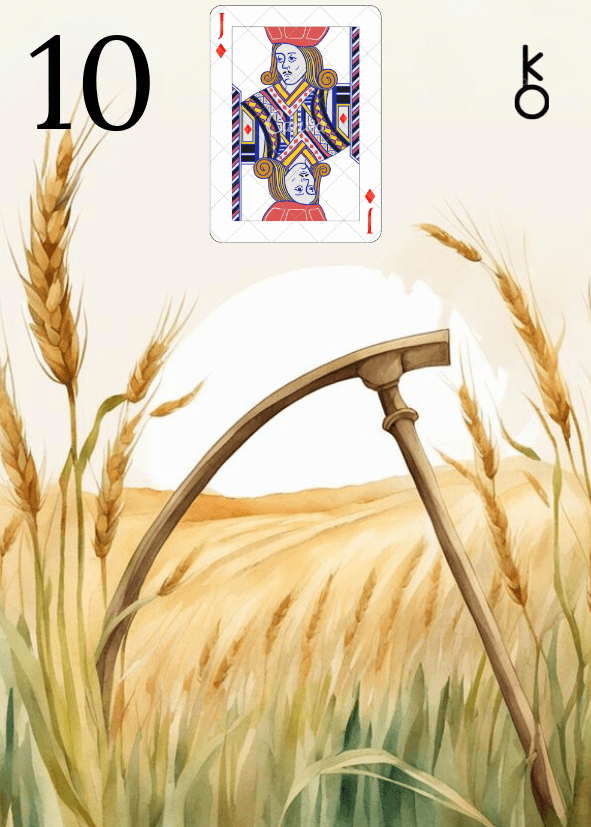
Lenormand card 10 Scythe
Quintessence

10 Scythe

The message bears the mark of a clear turning point that contrasts with the previous situation.

decisive blow announced break imposed change
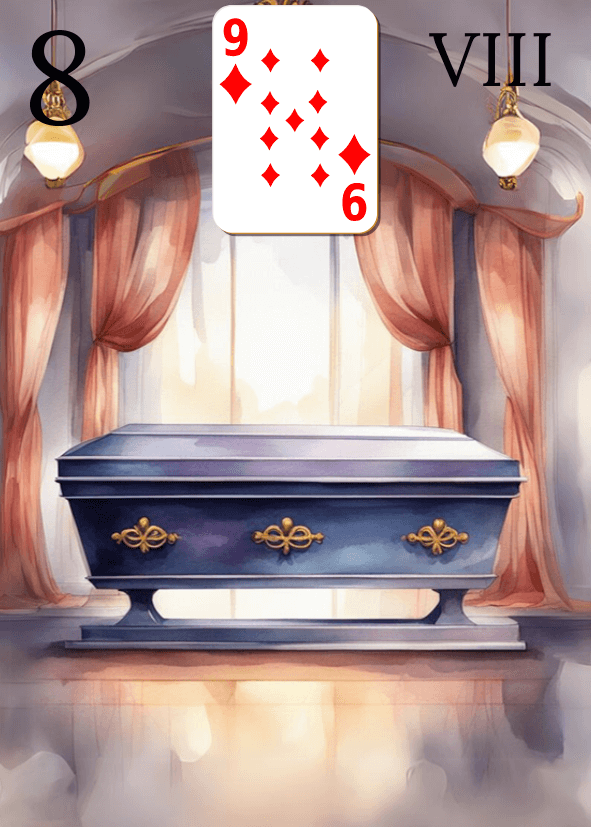
Lenormand card 08 Coffin
Hidden card

08 Coffin

Deep down, it is the end of a chapter and the beginning of a period of transformation.

silent closure inevitable transition inner mutation