Petit Lenormand combinations

Tower and Cross

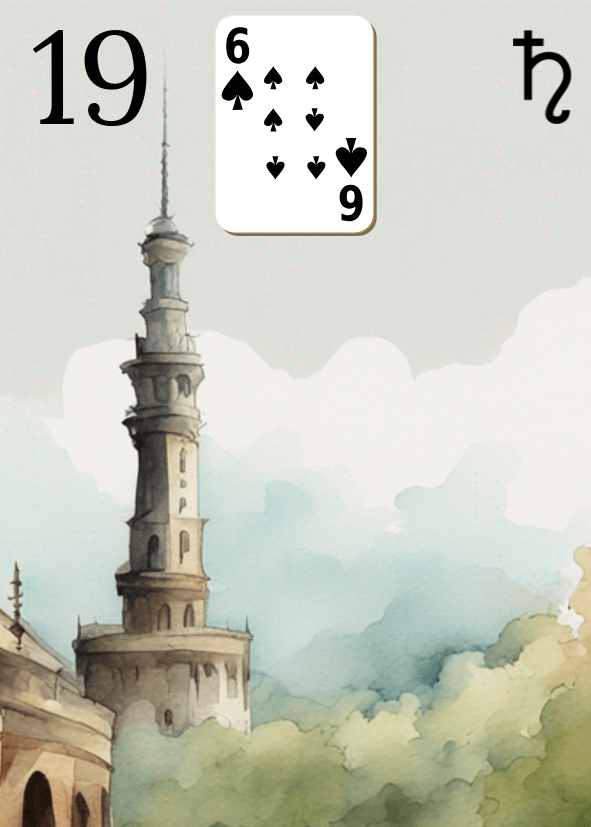
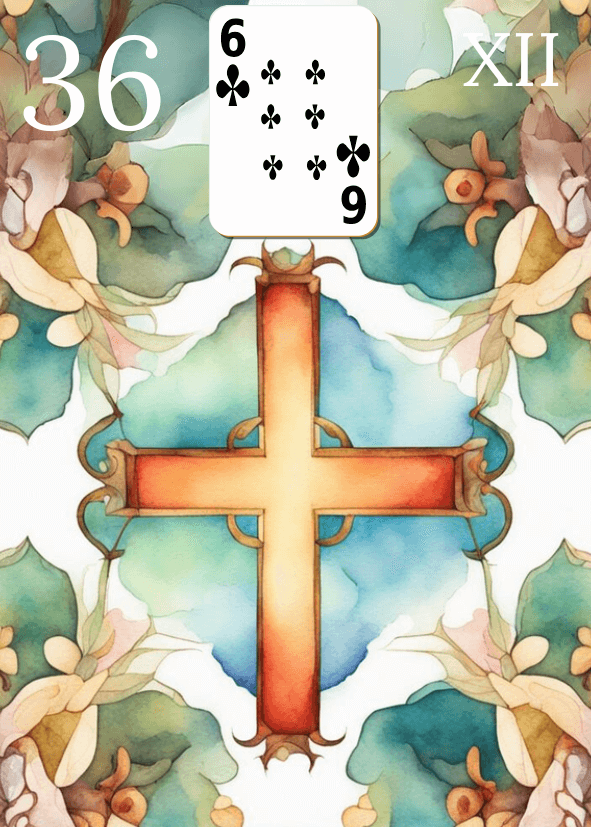
Here you see the two possible orders of the pair Tower and Cross. On the left, Tower acts on Cross. On the right, Cross sets Tower in motion. The concrete scenes help you feel what shifts as soon as the order shifts.

Combination
19 Tower → 36 Cross

General meaning

An already austere structure is crossed by a trial that seems preordained.

This combination stages a universe of rules, height, and distance, suddenly weighed down by a feeling of fatality or painful duty. The Tower emphasizes retreat, isolation, institutional logic; The Cross introduces the notion of sacrifice, moral burden, weight of the past. It may be a situation endured out of obligation, loyalty, or fear of the consequences of change. The whole invites you to question what you truly bear by choice and what you carry solely because 'it has always been this way.'

Love and relationships

The emotional bond goes through a period where distance and suffering seem inevitable.

In terms of love, The Tower and The Cross evoke a couple or a story where one feels alone even together. External constraints, differences in values, or accumulated wounds can create a climate of painful coldness. Some remain in the relationship out of a sense of duty, for the children, for the image, or out of fear of upheaval. Others experience inner solitude after a breakup, as if they were locked in a tower with their grief. The reading invites you to recognize the part of pain you still consider 'normal' and to ask yourself if it truly is for you.

Work and vocation

The professional field resembles a fortress where one holds on despite great moral fatigue.

In the work sphere, this duo can describe a heavy institutional environment: a very vertical hierarchy, a burden of heavy files, responsibilities that no longer seem meaningful. One sometimes feels stuck in a position that no longer nourishes, but seems impossible to leave. The Cross emphasizes the feeling of having to 'endure' the situation, out of loyalty, fear of unemployment, or fidelity to a path. The combination suggests distinguishing between what is a conscious commitment and what has become pure resignation, in order to envision another possible relationship to work and merit.

Money and material security

Finances are linked to a heavy context, where every decision seems laden with stakes.

On the material side, Tower and Cross can point to debts, fixed charges, or financial obligations that weigh in the long term. It may involve a credit that is difficult to bear, an expensive legal matter, or a system of aids and rights that confines as much as it supports. Some choose the hardest path, out of principle or guilt, without considering lightening this burden. The draw encourages you to examine whether solutions exist to redistribute, renegotiate, or lighten certain commitments, even if it involves changing the framework.

Health and energy

The body expresses the cumulative effect of prolonged stress, constraints, and unprocessed guilt.

In terms of health, this combination can speak of deep exhaustion, chronic pain, and long-standing nervous tension. The Tower refers to the tendency to keep everything to oneself, to grit one's teeth, to appear strong; the Cross emphasizes the suffering that one ultimately considers inevitable. It may involve a psychosomatic terrain strongly linked to the experience of duty, sacrifice, or rigidity. The message is not to further guilt, but to recognize the legitimacy of a lightening, support, or change of posture towards life.

Objects

Objects reflect heavy burdens, frozen files, and symbols of sacrifice.

  • Dusty or archived files that one cannot definitively close
  • Legal documents, judgments, official decisions that are difficult to live with on a daily basis
  • Crosses, medallions, or religious symbols associated with an idea of suffering or atonement

Places

Places suggest elevated but cold spaces, where one carries much without being truly heard.

Possible settings include old buildings, religious or judicial institutions, austere office towers, corridors where one waits a long time before being received. It may also involve a high dwelling in which one goes through a period of great solitude. These places carry an atmosphere of seriousness, sometimes severity, where everyone seems to absorb their own share of the cross without sharing it.

Personality

A solid temperament assumes significant responsibilities, sometimes at the expense of its own gentleness.

Psychologically, this duo describes someone who feels compelled to remain strong, dignified, impeccable, even when life puts them to the test. This person may have learned very early to protect themselves in an inner tower, to cut themselves off from their most vulnerable needs to fulfill their role. They are capable of endurance, composure, seriousness, but risk forgetting themselves along the way. The draw suggests reconsidering the place of self-compassion in this responsibility framework.

Profession

Roles where one bears heavy burdens in demanding structures.

  • Magistrate, lawyer, social worker, or professional confronted with human suffering in an institutional setting
  • Manager or supervisor in an environment where decisions have a strong impact on others
  • Reference person in a structure, on whom everyone relies in times of crisis

Archetype

The tower crowned with a cross.

The image is that of a building raised towards the sky, topped with a sign reminding of suffering, faith, or the sense of duty. It speaks of those periods when one feels compelled to endure more than their share, in silence, for the structure to hold. This archetype invites you to ask yourself how far you still want to bear alone what weighs on you, and what could be redistributed, transformed, or simply recognized.

Shadow work

To sacrifice oneself for a framework or role that no longer nourishes the soul.

In its darkest version, this combination conveys the temptation to lock oneself into the martyr's posture: continuing to hold a place, to respect rules, or to serve a structure, while everything within screams that it is over. One may also harshly judge those who choose to lighten their cross, as if the only respectable path were suffering. The draw opens the door to another way of living responsibility, where dignity is not measured by the amount of pain endured.

Calibration questions

What part of the burden you carry today truly falls within your mission?

  • In which area do you feel like you are living in a tower with a cross on your shoulders?
  • What prevents you from lightening at least some of the obligations that seem unmovable?
  • What would you need to accept the idea that a change can arise even in the heart of what seems fixed?
Combination
36 Cross → 19 Tower

General meaning

A suffering experienced as inevitable leads to erecting walls to no longer be affected in the same way.

The Cross as the first card emphasizes the trial, the burden, the crisis period, or the deep wound. The Tower that follows shows the chosen response: to keep a distance, to harden, to build an inner citadel to no longer be vulnerable. It may be a perfectly understandable survival strategy, but in the long run, it risks isolating you from what could also heal you. The combination invites you to distinguish healthy protection from excessive closure.

Love and relationships

An emotional wound leads to a retreat, even a refusal to expose oneself again.

On the sentimental level, the Cross and the Tower can evoke a painful breakup, a betrayal, a loss of love, or a long history marked by suffering. After that, the natural reaction may be to close off, to withdraw, to tell oneself that love is no longer for you or that it will now be experienced at a distance. Some choose very controlled relationships, while others settle into a solitude that aims to be protective. The reading does not seek to deny the depth of the wound but questions you about the possibility, one day, of letting a little light into this tower.

Work and vocation

After a difficult passage, work becomes a serious refuge, but emotionally unfulfilling.

In the professional sphere, this duo can describe someone who, after a personal crisis or failure, takes refuge in work like in a tower. One dedicates oneself to files, objectives, responsibilities, keeping the world at a distance. The Cross indicates the suffering that led to this positioning; The Tower illustrates the need for control and mastery that follows. This configuration can help rebuild oneself for a time, but the risk is to end up existing only through one's role, forgetting one's own emotional needs.

Money and material security

Material difficulties or losses lead to a very harsh and controlled attitude towards money.

On the financial level, The Cross followed by The Tower can speak of bankruptcy, debt, a personal or family economic crisis that has left deep scars. Subsequently, one may become extremely cautious, even rigid: refusal to take the slightest risk, fear of spending, obsession with security. This reaction is understandable, but it can also prevent any evolution, trust, and healthy circulation of resources. The draw invites you to identify the areas where your relationship with money is still dictated by the fear of an old shock.

Health and energy

The body retains the memory of a trial and organizes itself around a very controlled posture.

In terms of health, this duo suggests an organism marked by a difficult episode: serious illness, burnout, depression, accident, or a long period of extreme stress. The Cross recalls the intensity of this experience, The Tower evokes the establishment of defenses, very strict routines, sometimes a certain physical or psychological rigidity. One may be inflexible with oneself, for fear of relapsing. The combination encourages honoring the limits built while gradually considering a softening where it is possible and safe.

Objects

Objects refer to material traces of the trial and to what now serves as a rampart.

  • Medical files, judgments, official letters recalling a particularly painful period
  • Religious objects, memories or relics associated with a significant trial
  • Doors, locks, security systems or barriers that materialize the need for control and protection

Places

Places illustrate a retreat upwards or away to preserve oneself from the tumult.

Possible settings include a high-floor apartment, an isolated office, a room where one often withdraws, or institutional buildings visited after a tragedy. These are spaces where one attempts to regain control over what has escaped all mastery. They can be both reassuring and suffocating, depending on how one locks oneself in or how one breathes there.

Personality

A character marked by the trial chooses distance rather than vulnerability.

On a psychological level, this combination depicts someone who has lived a lot, perhaps too early, and who has learned to rely only on themselves. This person may appear cold, distant, even harsh, while in reality, they protect a very sensitive heart. They value mastery, solidity, consistency, but struggle to ask for help or to let others approach. The draw suggests that true strength could lie as much in the ability to say 'I have suffered' as in remaining impassive.

Profession

Roles where one specializes in managing the difficult, sometimes at the cost of inner isolation.

  • Professional confronted with suffering or crisis who maintains distance to continue working
  • Specialist in complex, contentious, or traumatic files in a rigid structure
  • Person holding a high position after going through trials that have hardened them

Archetype

The cross engraved in the stone of the tower.

The image is that of a symbol of suffering inscribed on the wall of a tower. It speaks of events that leave a lasting mark and motivate the construction of a rampart. This archetype invites you to recognize what, in your own story, has motivated certain closures, and to consider the possibility that one day these walls may also serve as a point of observation rather than just a barricade.

Shadow work

Defining oneself solely by one's wounds to the point of locking oneself in a haughty solitude.

In its darkest facet, this combination can lead to a form of painful pride: 'no one can understand what I have lived', 'I trust no one anymore'. One then erects walls so thick that nothing and no one can truly enter. There is a risk of transforming an experience of trial into a fixed identity. The draw suggests reflecting on what you could gain, and not lose, by slightly opening this tower to chosen presences.

Calibration questions

How to honor what you have gone through without condemning yourself to remain in the tower it has built?

  • What trial has contributed the most to making you distance yourself from others or from life in general?
  • In what way does this distance still protect you, and in what way does it deprive you today of what you would need?
  • What would be a first very concrete gesture to introduce a bit more softness into the fortress you have built?
A wink for advanced readers

Quintessence and the hidden card of the pair

Each combination is carried by a Quintessence that gives the overall direction, and a hidden card that works in the background. These two cards illuminate the scene without replacing the main reading.

Lenormand card 19 Tower
Quintessence

19 Tower

The trial challenges your ability to stand tall and rely on your own verticality.

inner retreat strength of character personal structure
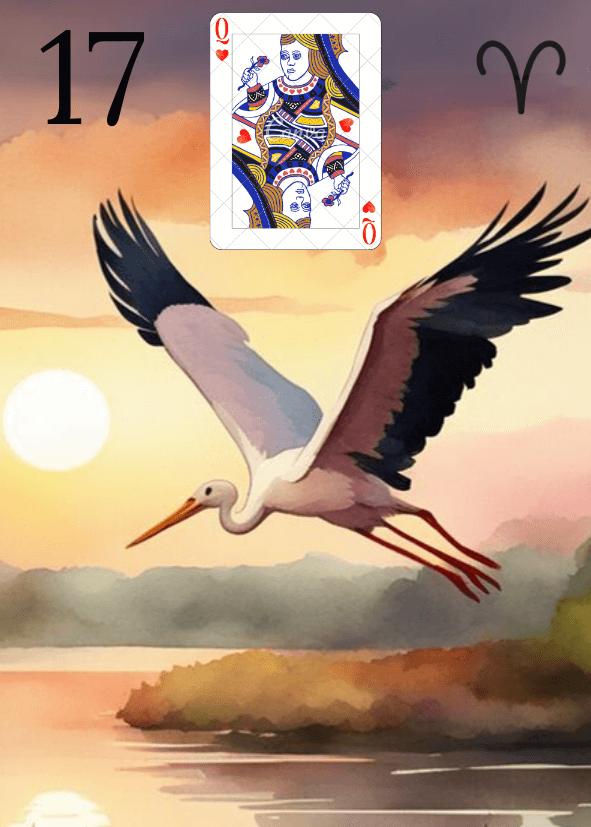
Lenormand card 17 Stork
Hidden card

17 Stork

At the heart of what seems frozen, a profound change slowly matures.

intimate mutation inevitable transition cycle in motion