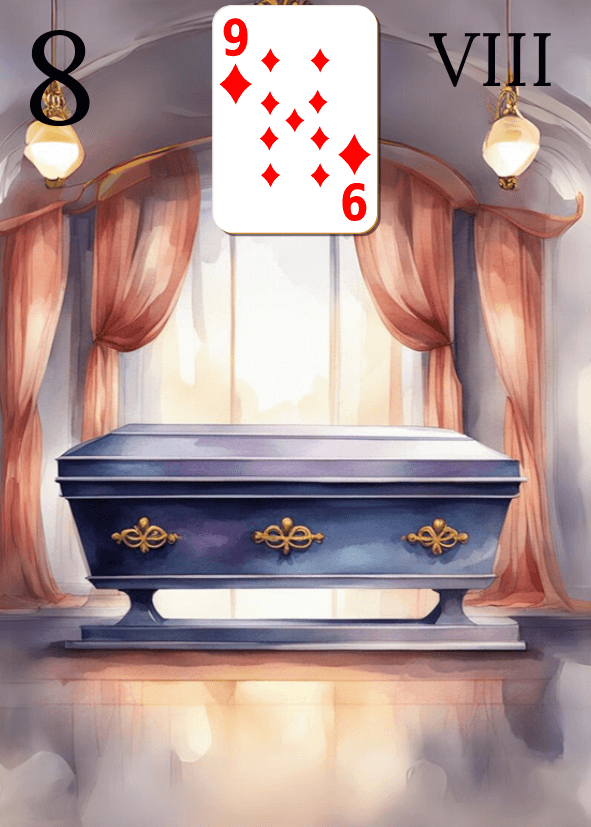
House 08: Coffin
What is coming to an end or needs to be closed?
In a Grand Tableau, the House of the Coffin draws your attention to what can no longer continue as before.
Something is reaching the end of a cycle.
This may be a situation ending, an activity stopping, a stage that needs to be closed, or something that simply no longer has the same life it once did.
To read this House, look at the card there and ask yourself:
What is coming to an end or needs to be closed?
The card there helps you understand what is stopping, running out, or calling for a real ending.
Start by looking at what is ending
With the Coffin, it can be tempting to look straight away for what will be reborn afterward.
But start with the ending.
If a door is closing, first look at which door is closing.
The card in this House may show what has reached the end of its path.
It may also show something at a standstill, no longer creating the same movement, or something that needs to be left behind.
Simply ask yourself:
What can no longer continue as before?
You can look for what comes next afterward.
Ending, stopping, or getting stuck are not quite the same
Not every situation shown by the Coffin works in the same way.
Something may truly be over.
Something may be temporarily on hold.
And something may remain frozen without fully coming to an end.
The card placed in this House helps you tell the difference.
This matters because a motionless situation is not necessarily a closed one.
Sometimes the Coffin says:
It is over.
Sometimes it says instead:
Nothing is moving here anymore.
The rest of the Grand Tableau will help you see which of these two stories is unfolding.
A few examples to help you understand
With the Letter
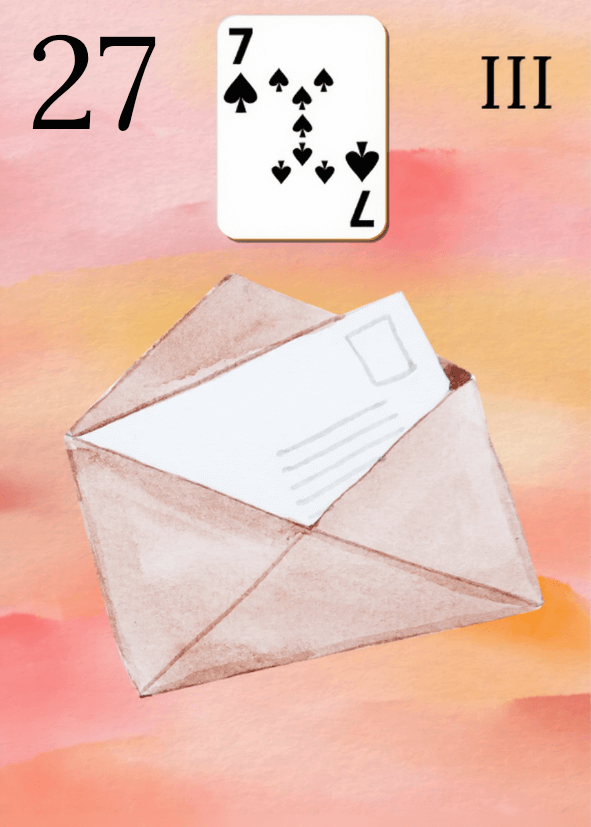
The Letter speaks of a message, document, or written information.
In the House of the Coffin, it may show a document marking an ending.
This could be a notice, a file being closed, a cancellation, a letter ending a stage, or information that makes the closure official.
The Coffin shows the ending.
The Letter shows how it is announced or formalized.
With the Stork
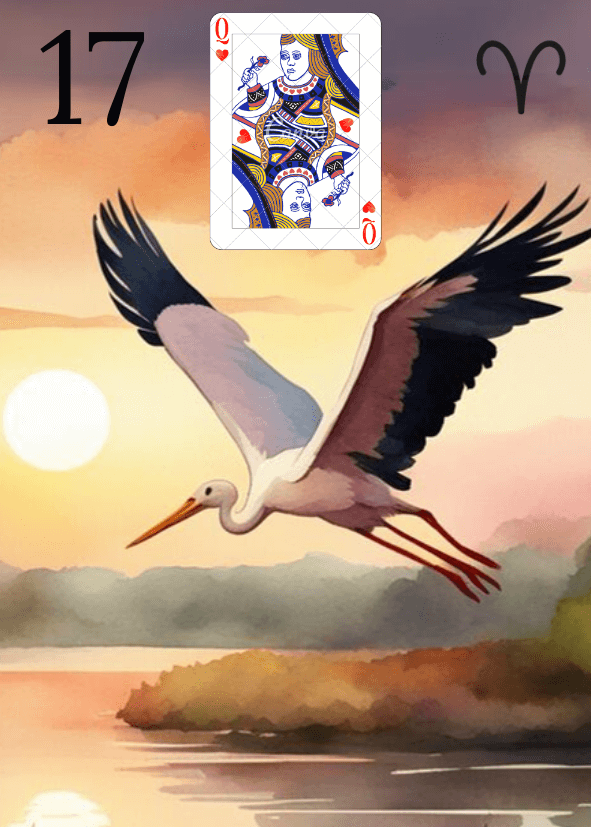
The Stork speaks of change and transition.
In the House of the Coffin, it may show that change becomes possible because a stage is ending.
But the order matters.
We do not begin by saying:
A new life is beginning.
We begin by looking at what really needs to close.
The Stork then shows that this ending may set something else in motion.
Here, the change does not erase the ending.
The ending becomes the necessary passage.
With the Anchor
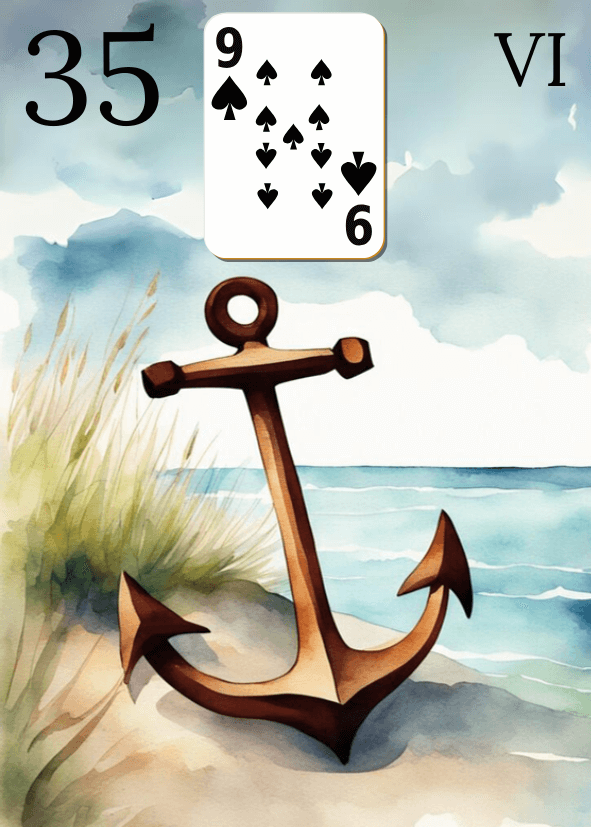
The Anchor speaks of stability, duration, and what remains fixed.
In the House of the Coffin, it raises an interesting question:
Is something ending, or is something simply stuck?
It may show the end of a job or an established situation.
But it may also speak of a situation that no longer moves and stays frozen for a long time.
The Coffin brings the stop.
The Anchor shows how firmly that stop may remain in place.
The other cards will help you understand whether this is a true ending or a lasting standstill.
What if the Coffin falls in its own House?
When the Coffin falls in the House of the Coffin, an ending, a stop, or a transformation takes up an important place in the Grand Tableau.
But here, different authors do not tell exactly the same story.
One tradition focuses mainly on what is ending or needs to be closed. Another places more emphasis on what may start again differently after this transformation.
So it is better not to decide too quickly that this position only predicts an ending, or that it necessarily promises a new beginning.
Look at the cards around the Coffin.
Do they show something closing, running out, or stopping? Or do they already show what is changing and beginning to come back to life?
In its own House, the Coffin strongly draws your attention to this passage. The rest of the tableau will tell you which way it is unfolding.
An ending does not automatically tell you what comes next
The Coffin may sometimes open the way to transformation.
But the rest of the Grand Tableau needs to show that transformation.
The House of the Coffin alone does not promise a happy rebirth.
First, it asks you to recognize that a stage has reached its limit.
This can be difficult, because we may want to know already:
What comes next?
But it can help to let that question wait for a moment.
Before looking at what begins again, ask yourself:
What do I need to accept is over?
An ending does not mean death
The Coffin may speak of grief, exhaustion, or illness when the reading really concerns these subjects.
But this House can never, on its own, predict someone's death.
In most readings, it speaks much more simply of an ending, a pause, loss of movement, or closure.
There is no need to turn every Coffin into a dramatic event.
Simply look at what is fading or closing in the situation.
Remember
At position 08, start by asking:
What is coming to an end or needs to be closed?
Then look at the card there.
It may show what is ending, what remains at a standstill, or how the ending is taking shape.
Do not look for the new beginning too quickly.
The Coffin first asks you to see what needs to be allowed to end before the story can continue in another way.