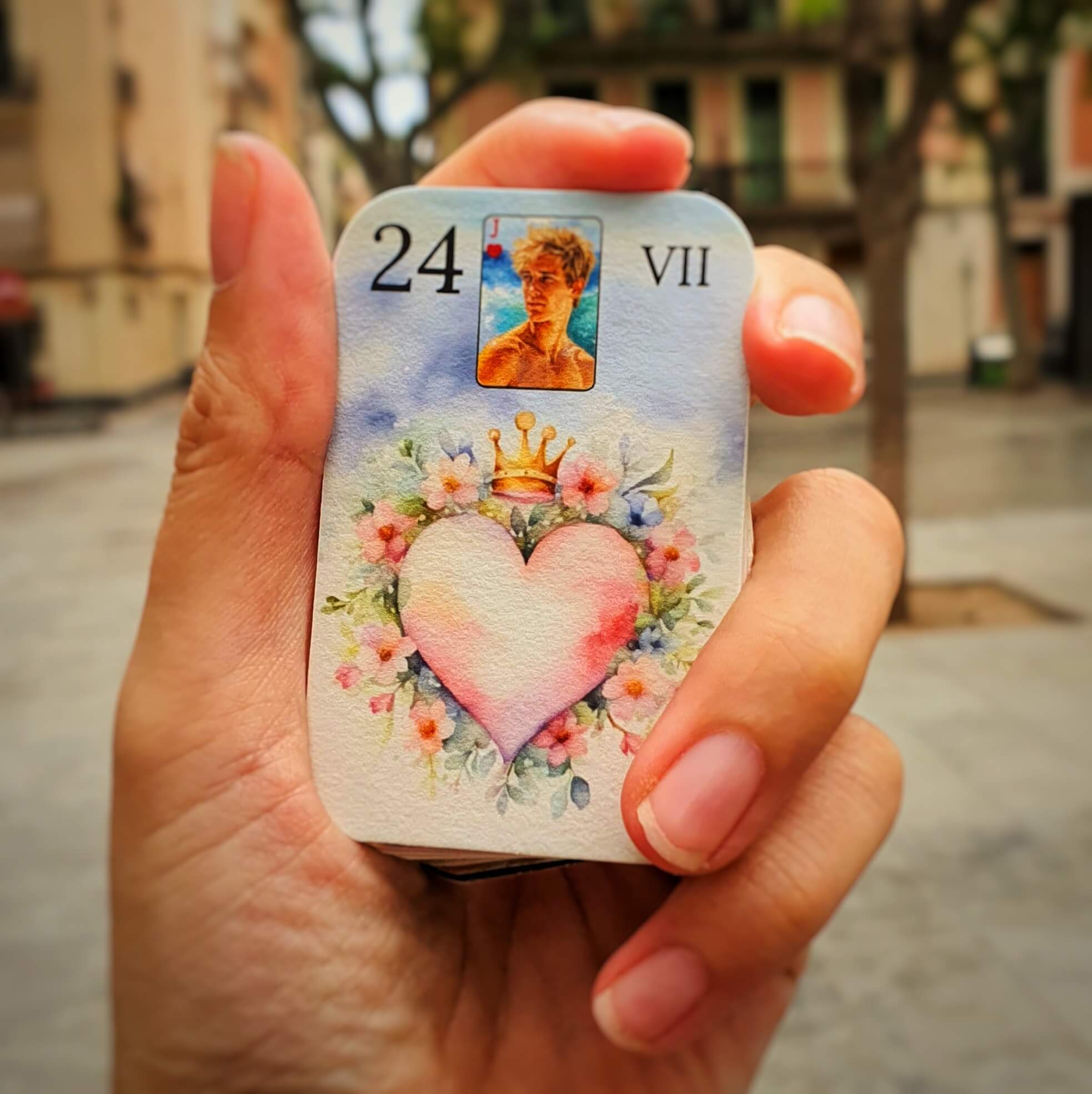
House 10: Scythe
What is being cut or needs a quick decision?
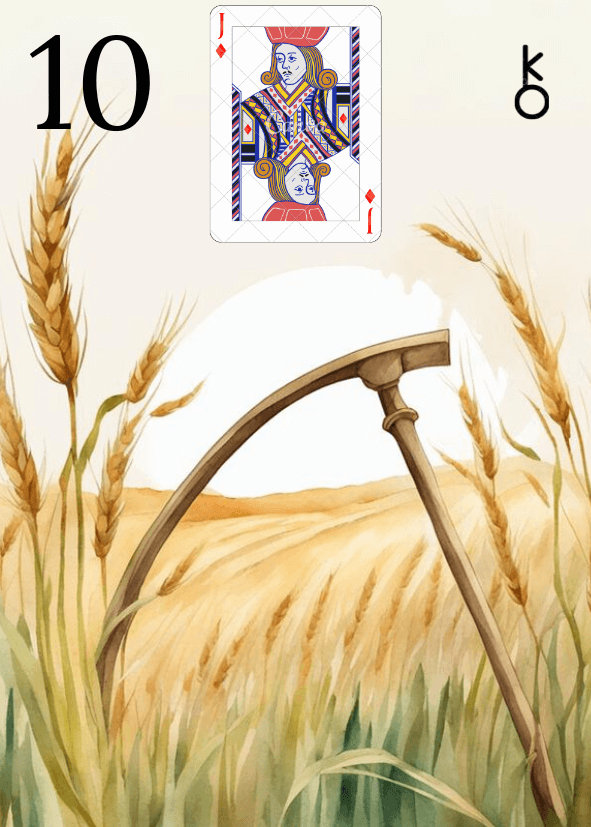
In the Grand Tableau, the House of the Scythe is where you look at what needs to be separated, interrupted, or decided clearly.
The card that falls here shows what is affected by this cut or decision.
Simply begin by asking:
What is being cut or needs a quick decision?
Then let the card answer.
The House shows the action; the card shows what it affects
This is the most important point.
The House of the Scythe does not tell you by itself what is being cut.
It tells you to look here for a separation, interruption, or clear decision.
The card there then shows what this action concerns.
It gives you the subject.
With the Letter
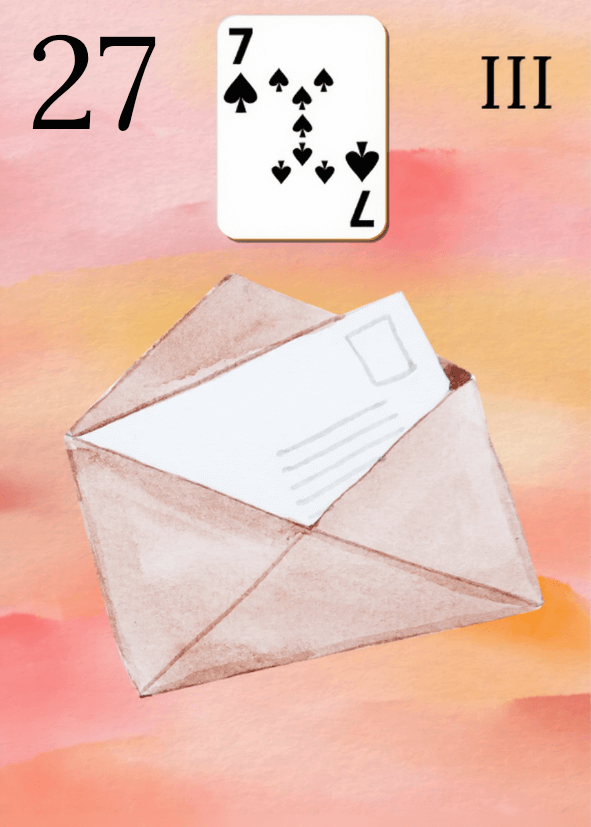
The Letter speaks of a message, contract, or document.
In the House of the Scythe, it may show a document that needs a clear decision, interruption, or ending.
This could be a cancellation, a refusal, a final answer, or a document that requires a clear decision.
House 10 brings the cut.
The Letter shows what it concerns.
With the Clouds
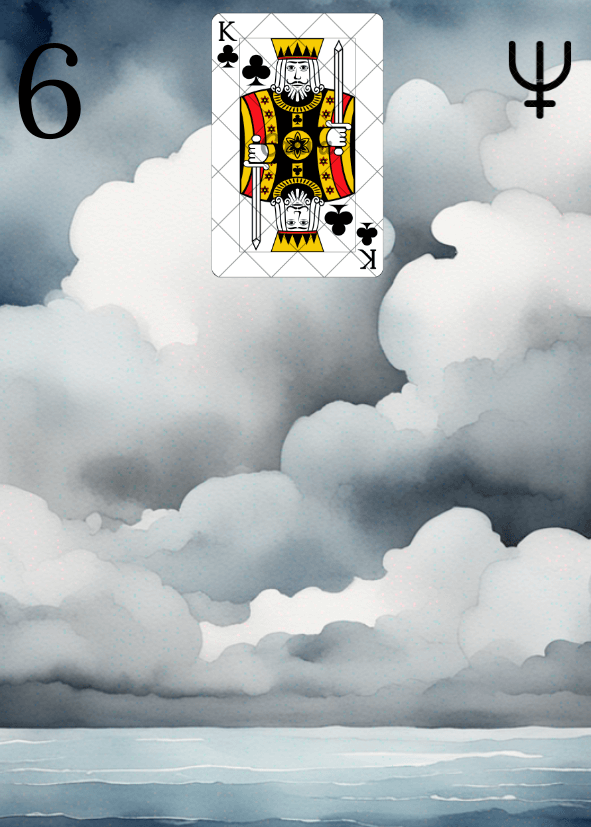
Clouds speak of confusion and a lack of clarity.
In the House of the Scythe, they may show a decision coming while things are still unclear.
The question then becomes:
What might I cut off before I have all the information?
Here, the House shows that a decision or cut is at stake.
Clouds show why it is wise to be careful before acting.
What if the Scythe falls in its own House?
When the Scythe falls in the House of the Scythe, a cut or decision needs to be looked at directly. Something may need to be separated, cleared away, or removed so the situation can move forward.
Notice what the Scythe touches in the Grand Tableau. Is it a habit to interrupt, a tie to cut, a risk to avoid, or an obstacle that is no longer useful? Some sources give this action an urgent quality, but acting quickly does not mean acting blindly.
This position is not enough to predict an accident or a permanent break. It mainly emphasizes that a clear action matters now.
To understand the cut, find the Scythe card
There is an important distinction here.
The card placed in House 10 shows you the subject of the cut.
But to understand how this cut acts in the Grand Tableau, also find the Scythe card itself, wherever it actually fell.
It is not necessarily in position 10.
Then look at the cards on either side of the Scythe.
They may help you understand what the Scythe separates, what lies before the cut, and what lies after it.
In other words, do not look for the whole dynamic of the cut around House 10.
House 10 tells you:
Here is the subject to look at.
The Scythe card then lets you see the cut in action in the tableau.
A cut does not necessarily mean a permanent ending
A cut can be decisive without lasting forever.
A conversation may stop and then resume.
An arrangement may be interrupted and then rebuilt differently.
The House of the Scythe mainly shows the moment something is separated or decided.
It does not necessarily tell the whole story afterward.
The Scythe and Coffin do not ask the same question
The House of the Scythe looks at the act of cutting or deciding.
The House of the Coffin looks instead at what is over, stopped, or closed.
This is a simple but useful difference.
The Scythe asks:
Where is the cut?
The Coffin asks:
What is over?
Remember
At position 10, do not begin by interpreting the Scythe as a card.
Look at the position itself as a fixed question:
What is being cut or needs a quick decision?
The card there gives you the subject.
Then, if you want to understand how the cut works, find the Scythe in the Grand Tableau and look at what happens on either side.
The House shows where to ask the question.
The card there shows what it concerns.
And the Scythe itself shows the cut in action.